The gambler's fallacy, and how casinos use it to get rich
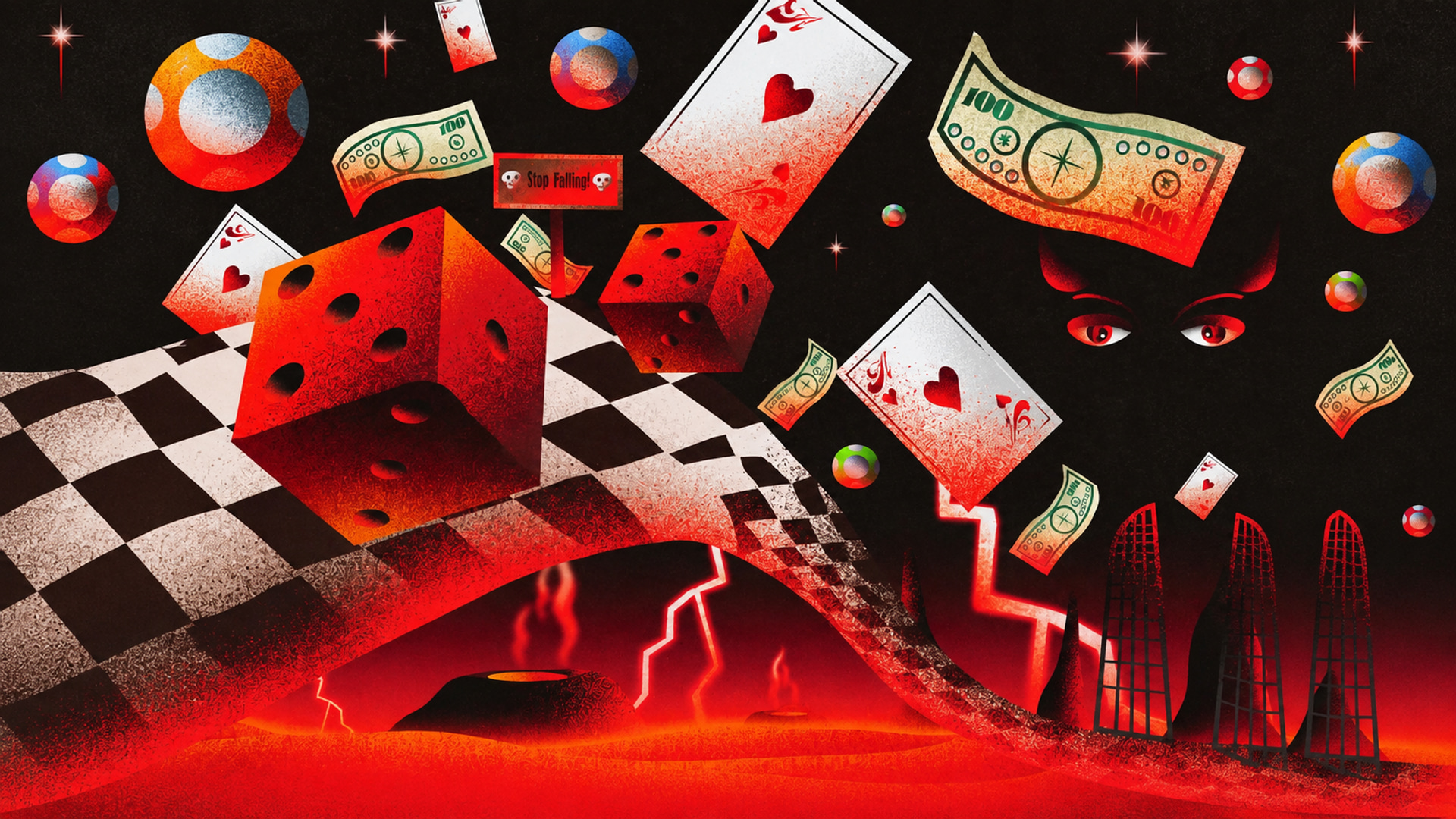
Four losses in a row, so the next one has to land. Red five times, so black is coming. Cold all month, so you're due.
That feeling has a name, a body count, and a business built around it. This is where it comes from, what it costs, and why the house is happy to help you feel it.
Monte Carlo, August 1913
On the night of 18 August 1913, a roulette wheel at the Monte Carlo Casino landed on black. Then black again. It kept landing on black twenty six times in a row.
The odds of either colour running twenty six straight on a single zero wheel are roughly 1 in 68 million. Word spread through the rooms, and players crowded the table to bet on red, doubling and redoubling as the run went on, certain that the correction was overdue. By the time red finally came, gamblers had lost millions of francs.
Nothing was wrong with the wheel. It was doing exactly what a fair wheel does. The mistake was in the room, and it was so pure an example that the bug is still sometimes called the Monte Carlo fallacy.
Why your brain does this
A fair wheel has no memory. Neither does a coin, a deck, or a slot machine. Every spin starts from zero, and the previous result has no influence on the next one at all.
Your brain refuses to believe that, and it refuses for a reason. We expect short runs of a random process to look like the long run average, so eight blacks in a row registers as broken rather than normal. Psychologists call this the law of small numbers, and correcting it feels like fixing an error rather than making one.
The important part is that this isn't a gambler's flaw or a sign you're bad at maths. In 2016 a study in the Quarterly Journal of Economics went looking for the same pattern in people paid to be objective, and found it in all three groups examined: asylum judges, loan officers, and Major League Baseball umpires. Each was measurably more likely to rule against a case simply because they had ruled in favour of the one before it. Careers, loans, and asylum claims, all bent by the same bug.
Trained professionals, high stakes, full attention, no money on the line. They did it too.
The house knows, and puts it on a screen
Walk past a roulette table and look above the wheel. There is a board showing the recent results.
Think about what that board is. It is a free, prominent display of information that has no predictive value whatsoever. The casino has never given away anything that helps you. It gives away this, in lights, at every table.
That is the whole trick in one object. The numbers are meaningless, which is precisely why the house can afford to show them. They exist so you can find a pattern, form a theory, and stay in the seat.
And it works, which we know because someone checked. In a study published in the Journal of Risk and Uncertainty, researchers pulled eighteen hours of security footage from a single roulette table in a Reno casino and tracked individual players by the colour of their chips. After streaks of five and six of the same colour, players piled onto the opposite one. Not a lab, not a survey. Real people, real money, on camera, doing exactly what the board invites them to do.
What "due" costs a bettor
Roulette makes the fallacy obvious because everyone accepts a wheel is random. Sports hide it, because sports have reasons. Players get injured, teams go cold, weather turns. There is always a story available, and a story makes "due" feel like analysis instead of superstition.
It rarely is. When a team is genuinely cold for a reason, that reason is already in the line, because the people setting it watch the same games you do. What's left over is the part you added yourself.
The real damage isn't in the thinking, it's in the sizing. A bet placed because you like the matchup and a bet placed because you're owed one are not the same bet. The second is usually bigger, faster, and less examined, because it isn't really a wager on the game. It's a wager that the universe keeps accounts. That is also the exact bridge into chasing losses, where the size of the last loss starts choosing the size of the next bet.
When the thought shows up
You will not argue yourself out of the feeling, because it doesn't come from the reasoning part of you. What works is catching it and letting it pass rather than acting on it.
- Say the actual rule. The wheel has no memory. The game has no memory. Nothing is owed. Said plainly, in your own voice, it loses some of its grip.
- Use the fresh eyes test. If you had walked up thirty seconds ago knowing none of the history, would this bet look good? If the only thing making it attractive is what came before, that's the fallacy, not a read.
- Check the size. Due bets are bigger. If this stake is larger than your last one and you can't say why in one sentence, that's your answer.
- Wait it out. Urges rarely hold their intensity for long. The thought that a win is owed is loudest right after a loss and much quieter twenty minutes later.
If those twenty minutes are the hard part, that's what Ungamble is built for: a panic button for the moment it hits, and Rux, an AI friend trained on the science of quitting, who will happily run the odds with you at 1am.
The one thing worth remembering
Twenty six blacks in a row is not the wheel building up to something. It's just what randomness looks like from close range.
Every system, every hunch about what's owed, and every board of past results leads to the same place: more spins, more bets, more time in the seat. That is the only outcome the house is actually selling.
Nothing is due. Not tonight, not after the next loss, not ever. The one move with a guaranteed return is the bet you don't place.
Sources: the Monte Carlo run of 18 August 1913 is the origin of the term Monte Carlo fallacy. Casino betting behaviour after streaks: Croson and Sundali, "The Gambler's Fallacy and the Hot Hand: Empirical Data from Casinos", Journal of Risk and Uncertainty 30(3), 2005. Professional decision makers: Chen, Moskowitz and Shue, "Decision-Making Under the Gambler's Fallacy: Evidence from Asylum Judges, Loan Officers, and Baseball Umpires", Quarterly Journal of Economics 131(3), 2016.
Frequently asked questions
What is the gambler's fallacy?
It's the belief that a random outcome becomes more likely because it hasn't happened recently, or less likely because it just did. Red is 'due' after a run of black, a cold team is 'due' for a win. The underlying events are independent, so the odds on the next one are identical no matter what came before.
Why do casinos display previous roulette results?
Because the information is worthless for predicting anything, and the house knows it. A board of recent numbers cannot improve your odds by a single percentage point, but it does invite you to spot patterns and stay at the table. It's one of the few things a casino gives away for free, which tells you what it's worth.
Does the gambler's fallacy apply to sports betting?
Yes, and it's harder to spot there. Sports have real causes, so 'they're due' feels like analysis rather than superstition. But genuine reasons for a cold streak are already priced into the line by the people who set it. The damage usually shows up in bet sizing: a bet placed because you feel owed one tends to be bigger and less examined.
Is the hot hand the same as the gambler's fallacy?
They're opposites, and people run both at once. The gambler's fallacy says a streak must break. The hot hand says a streak will continue. The same casino study that found players betting against long colour streaks also found they placed more bets after winning than after losing. Both beliefs lead to the same behaviour, which is staying in the seat.

The house stops winning today
Ungamble is the best iPhone app for beating gambling addiction: an AI mentor, a panic button for urges, and a shield between you and the betting apps.
Get Ungamble free